

The Cultural Shift: UX as a Whistle-blower
By Alex D. Rodriguez Chief Financial Officer & Certified Turnaround Analyst
Welcome to the third and final installment of the series, “The ROI of UX: A CFO’s Perspective.” Over the last two articles, I’ve worked to deconstruct the myth that UX is a “soft” science and reframe it as a rigorous financial discipline. We’ve explored how user-centricity drives revenue and mitigates waste.
In this concluding chapter, I’m pulling back the curtain on the most critical factor of all: Corporate Culture. I want to share why I believe a broken user experience is the “canary in the coal mine” for systemic organizational dysfunction, and how UX research acts as the ultimate internal audit.
How do you convince an organization that UX is a “must-have”? You don’t do it with a PowerPoint; you do it by revealing the systemic problems in the corporate culture. A company that ignores the user is usually ignoring its own internal red flags. In my career as a turnaround analyst, I’ve found that the “Product” is often the most honest witness to a company’s internal dysfunction.
The Volkswagen & NASA Parallel
In my analysis of the Volkswagen emissions scandal, I noted that the “faulty O-rings” in the Challenger disaster were but a symptom of a deeper problem in NASA’s corporate culture. To prevent further disasters, NASA had to change its working culture to ensure that future problems were discovered and corrected before lives were put in danger.
What does this have to do with UX? Everything. A “bad user experience” is rarely just a design flaw; it is a symptom of a culture that prioritizes features over functionality and internal politics over customer truth. When an organization refuses to fund UX research, they are essentially saying, “We don’t want to know the truth.” To sell UX research internally, you must frame it as a Transparency Tool—a “whistle-blower line” for the product itself.
Operationalizing UX: Engaging the “Machinists”
To drive this cultural shift, you must engage the “Ground Level” of the organization—the developers and the “machinists” who build the product. According to research from Purdue University, “rework” is the single largest waste in software development. UX research acts as an “Internal Audit” for the product development lifecycle. It ensures that the “honest employees”—the ones who want to build great things—are empowered with the data they need to challenge bad decisions before they are baked into the code.
The CFO-Friendly ROI Formula
For my fellow finance professionals, if you want a formula that captures the true return on a UX investment, focus on the Cost of Inaction.
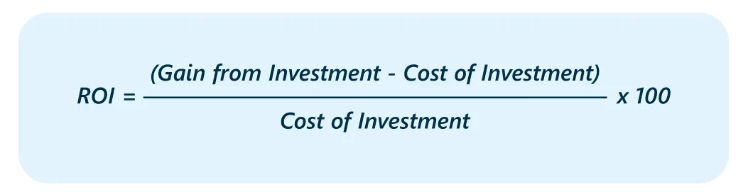
Where “Gain” is quantified by:
Dev Rework: (Labor hours saved by not building the wrong thing first)
Support Costs: (Direct reduction in “how-to” tickets and error-correction calls)
Compliance: (Avoidance of fines/legal fees in regulated industries)
Retention (LTV): (The incremental value of a customer who doesn’t leave due to “friction”)
Conclusion: The Convergence
UX practitioners and Finance professionals actually want the same thing: Efficiency, Risk Mitigation, and Value Creation. When we stop speaking in terms of “pixels” and start speaking in terms of “performance,” the ROI of UX becomes undeniable.
At Key Lime Interactive, we’ve seen that the most successful companies—those highlighted in the BCG Design Value Index (which outperformed the S&P 500 by 211%)—don’t treat design as a department. They treat it as a core business pillar, as essential as Information Security or Financial Audit. The question is no longer “What is the ROI of UX?” but rather “What is the cost of ignoring it?”
Ready to Stop Guessing and Start Growing?
The transition from a feature-led culture to a user-led culture doesn’t happen overnight, but I’ve seen it happen when leadership is armed with the right data. At Key Limhttps://keylimeinteractive.com/e Interactive (KLI), we specialize in providing the actionable insights that bridge the gap between user needs and your executive goals.
We help you operationalize empathy to:
- Eliminate costly rework by getting it right the first time.
- Reduce operational overhead through intuitive, frictionless design.
- Future-proof your brand with research-backed strategies that drive long-term LTV.
Don’t leave your ROI to chance. Reach out to us today to learn how we can help you turn your product into your most profitable asset.